-
Shop
- Advanced Technologies
- AI Skills Mastery 2026 Collection
- Car Accessories
- Dating & Social Skills
- Digital Resources
- Budgeting & Saving
- Emotional Intelligence
- Entrepreneurship & Business Growth
- Financial Independence
- Financial Mindset & Psychology
- Goal Setting
- Leadership
- Mindfulness
- Motivation
- Positive Thinking
- Productivity
- Self Confidence
- Sleep Improvement
- Stress Management & Relaxation
- Yoga & Mind-Body Practices
- Education & Learning
- Family & Parenting
- Fashion
- Accessories
- Alexander McQueen
- Bags
- Bags & Wallets
- Balenciaga
- Belts
- Blazers
- Blouses & Shirts
- Bottega Veneta
- Bottoms
- Brunello Cucinelli
- Burberry
- Chanel
- Chloé
- Dior
- Dolce & Gabbana
- Dresses
- Etro
- Fendi
- Gucci
- Hats & Hair Accessories
- Hoodies & Sweatshirts
- Jacquemus
- Jewelry
- Jil Sander
- Keychains
- Kiton
- Luggage
- Luggage Bags
- Miu Miu
- Off-White
- Outerwear
- Prada
- Rick Owens
- Saint Laurent
- Socks & Tights
- Sweaters & Cardigans
- The Row
- Tom Ford
- Tops & Shirts
- Valentino
- Valentino Garavani
- Versace
- Vivienne Westwood
- Watches
- Furniture
- Gadgets
- Health & Beauty
- Health & Wellness
- Home & Garden
- Kids & Babies
- Kitchen
- Lighting
- Patio, Lawn & Garden
- Personal Growth
- Pet Care
- Pet Supplies
- Pets
- Shoes
- Sport & Outdoors
- Travel
- Wealth
Futuristic Marble Run Puzzle: Build, Tune, Perfect Flow
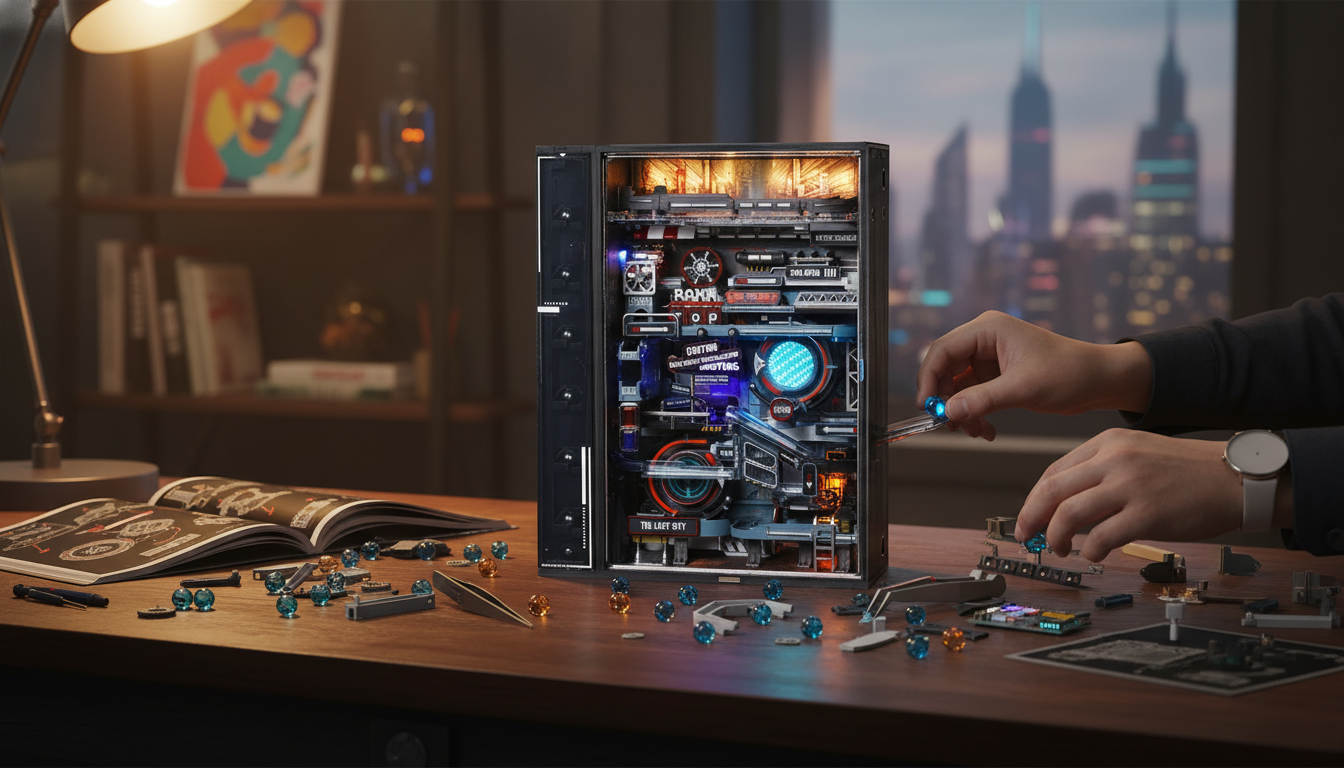
Futuristic Marble Run Puzzle: Build, Tune, and Watch the Flow
A buildable marble run that doubles as a kinetic desk showpiece: assemble the track, test the flow, and fine-tune the layout until each drop, curve, and transition runs smoothly. It’s part puzzle, part engineering toy, and part hands-on way to explore motion, momentum, and timing. For anyone who enjoys “one more tweak” projects, a futuristic marble run rewards careful attention with a run that looks as good as it feels.
If you’re shopping for a build that’s equal parts calming and absorbing, the Futuristic Marble Run Puzzle is an easy centerpiece choice—and it fits naturally into a desk, shelf, or coffee-table display without reading as a kid-only toy.
What It Is and Why It’s Satisfying
This style of marble run puzzle is built around a simple loop: build, test, adjust, repeat. Instead of assembling once and setting it aside, you’ll likely run marbles every few minutes to spot tiny hiccups—then refine the alignment until the track feels “locked in.”
- Build-and-test format: assemble sections, run marbles, then adjust for smoother transitions.
- Kinetic reward: the motion becomes the payoff, not just the finished build sitting on a shelf.
- Puzzle-like challenge: success depends on alignment, sequencing, and stability more than brute force.
- Focused downtime: immersive assembly that feels like problem-solving, not busywork.
At-a-Glance Guide
Expect a moderate challenge that becomes more satisfying as the run gets smoother and more repeatable. Builders who enjoy model kits, logic puzzles, or mechanical sets tend to click with this quickly.
Quick Snapshot
| Detail | What to Expect |
|---|---|
| Build style | Piece-by-piece assembly with frequent test runs |
| Challenge level | Moderate (higher if aiming for perfectly smooth, repeatable runs) |
| Replay value | High—retesting, refining alignment, and experimenting with variations |
| Learning themes | Gravity, momentum, friction, energy transfer, sequencing |
| Best placement | Stable, level surface to keep track sections aligned |
How the Build Typically Flows
The smoothest builds usually follow a “foundation first” rhythm. It’s tempting to jump straight to the dramatic drops and curves, but stability is what makes the whole thing feel futuristic—clean, controlled, and repeatable.
- Stage 1: organize parts before starting to reduce mid-build searching.
- Stage 2: assemble the base and main supports to prevent later wobble.
- Stage 3: add track segments from the start point downward so alignment stays consistent.
- Stage 4: test early and often; small misalignments are easier to fix immediately.
- Stage 5: lock in stability (check level surface, tighten connections, re-seat joints).
- Finish: run multiple marbles to confirm repeatability, not just a single successful pass.
What Makes a “Futuristic” Marble Run Feel Different
Classic marble runs can be playful and colorful; futuristic sets lean into a display-forward vibe. The goal isn’t only to complete the track—it’s to make the motion look intentional, almost like a small kinetic sculpture.
- Sleek look: more like a desktop showpiece than a toy bin project.
- Mechanical rhythm: smooth drops and transitions create a satisfying visual cadence.
- Flow-first fun: the best moments come from reducing stalls, rattles, and surprise stops.
- Conversation piece: it invites visitors to try “just one run,” then another.
Learning and Skill Benefits (Without Feeling Like Homework)
You don’t need a physics background to enjoy it—this is hands-on learning by feel. Each adjustment gives immediate feedback, which makes the process intuitive and genuinely engaging.
- Cause and effect: small angle and joint changes create noticeable differences in speed and stability.
- Iterative problem-solving: test → observe → adjust → retest becomes the natural rhythm.
- Spatial reasoning: you’ll start predicting how height, slope, and curvature influence the run.
- Patience and precision: careful connections lead to smoother, more reliable runs.
- Light physics exposure: gravity-driven motion, friction losses, and momentum become easy to “see.”
For a deeper refresher on the fundamentals behind what you’re observing, these references are helpful: Encyclopaedia Britannica on gravity, Khan Academy on forces and Newton’s laws, and the Smithsonian Science Education Center on STEM learning.
Setup Tips for Smoother Marble Runs
Most “mystery problems” come down to surface level, connection seating, and transition speed. A few small habits make the run noticeably more consistent.
- Use a level surface: even slight tilts can change speed and cause derailments.
- Re-seat connections: if a section looks skewed, press-fit consistency matters more than extra force.
- Keep the track clean: dust and tiny debris can add friction right where it matters.
- Avoid “too steep” fixes: extra speed can cause bouncing or overshooting at transitions.
- Test with consistent marbles: do final tuning using the marble size/type you’ll use regularly.
Who It’s For (and When It’s a Great Gift)
For gifting, it also pairs well with practical add-ons: a rugged everyday wearable like the Military Outdoor GPS Sports Smartwatch with HD Call & Health Tracking for makers on the go, or a polished everyday carry option like the Chic Half Moon Leather Crossbody Bag for a more lifestyle-forward bundle.
Care, Safety, and Long-Term Enjoyment
Common Issues and Quick Fixes
FAQ
How long does it take to build a marble run puzzle like this?
Most builds land in the 1–3 hour range depending on experience, and it’s common to split it into multiple sessions. Frequent test runs and small adjustments are part of the process, so “build time” includes tuning for smooth repeats.
Is it difficult for beginners?
Beginners can absolutely succeed by organizing parts, following steps carefully, and testing often. The main challenge is patience and alignment, not complicated tools or advanced skills.
What can be done if the marbles keep getting stuck?
Check that the surface is level, re-seat any joints that look slightly skewed, and wipe the track to remove dust that adds friction. If the issue happens at a transition, reduce steepness leading into it and retest after each small change.
Recommended for you

Was this article helpful?
Yes
No









Leave a comment