-
Shop
- Advanced Technologies
- AI Skills Mastery 2026 Collection
- Car Accessories
- Dating & Social Skills
- Digital Resources
- Budgeting & Saving
- Emotional Intelligence
- Entrepreneurship & Business Growth
- Financial Independence
- Financial Mindset & Psychology
- Goal Setting
- Leadership
- Mindfulness
- Motivation
- Positive Thinking
- Productivity
- Self Confidence
- Sleep Improvement
- Stress Management & Relaxation
- Yoga & Mind-Body Practices
- Education & Learning
- Family & Parenting
- Fashion
- Accessories
- Alexander McQueen
- Bags
- Bags & Wallets
- Balenciaga
- Belts
- Blazers
- Blouses & Shirts
- Bottega Veneta
- Bottoms
- Brunello Cucinelli
- Burberry
- Chanel
- Chloé
- Dior
- Dolce & Gabbana
- Dresses
- Etro
- Fendi
- Gucci
- Hats & Hair Accessories
- Hoodies & Sweatshirts
- Jacquemus
- Jewelry
- Jil Sander
- Keychains
- Kiton
- Luggage
- Luggage Bags
- Miu Miu
- Off-White
- Outerwear
- Prada
- Rick Owens
- Saint Laurent
- Socks & Tights
- Sweaters & Cardigans
- The Row
- Tom Ford
- Tops & Shirts
- Valentino
- Valentino Garavani
- Versace
- Vivienne Westwood
- Watches
- Furniture
- Gadgets
- Health & Beauty
- Health & Wellness
- Home & Garden
- Kids & Babies
- Kitchen
- Lighting
- Patio, Lawn & Garden
- Personal Growth
- Pet Care
- Pet Supplies
- Pets
- Shoes
- Sport & Outdoors
- Travel
- Wealth
Pomodoro + Eisenhower + Time Blocking: Less Stress, More Time
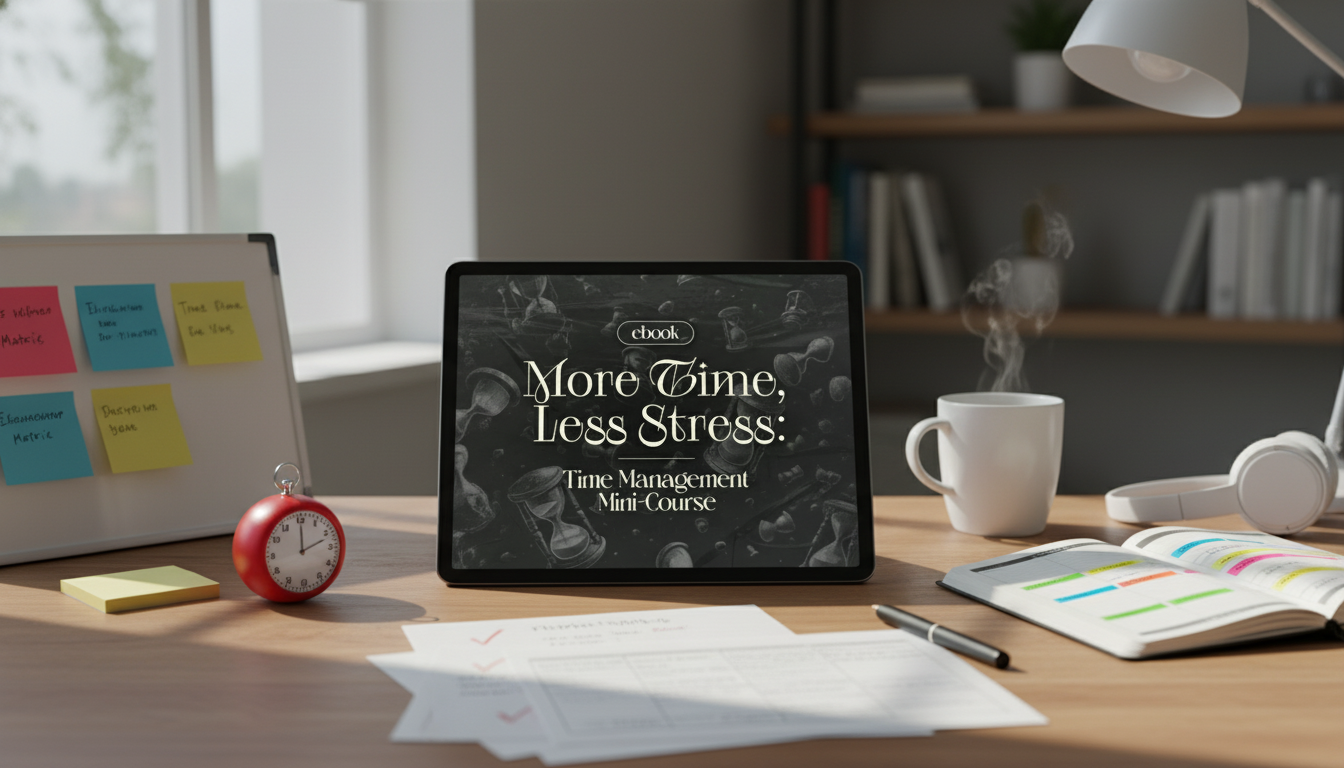
More Time, Less Stress: A Practical Mini-Course for Pomodoro, Priorities, and Time Blocking
Busy schedules don’t have to feel chaotic. A simple, repeatable system can reduce decision fatigue, protect focus time, and make room for what matters most. This mini-course approach blends three proven methods—Pomodoro focus sprints, the Eisenhower Matrix, and time blocking—so your daily plan is easier to follow and your stress is easier to manage. Instead of constantly reacting, you decide once, then execute.
Who this mini-course is for
- People juggling work, family, and personal goals who need a consistent planning routine
- Anyone stuck in “always busy, rarely done” cycles caused by constant task switching
- Students and professionals who want focus sessions that don’t rely on willpower alone
- Creators and remote workers who need boundaries around meetings, deep work, and recovery time
The core idea: fewer decisions, clearer priorities, protected time
- Reduce stress by deciding in advance what to do, when to do it, and what to ignore for now.
- Combine prioritization (what matters) with scheduling (when it happens) and focus (how it gets done).
- Use a light weekly plan plus a daily execution rhythm rather than constantly re-planning.
When the day gets noisy, the goal isn’t to “power through.” It’s to fall back on a default structure that keeps you moving without renegotiating every decision. That structure also supports healthier stress responses and recovery habits (helpful background: APA stress resources).
Pomodoro: focus sprints that prevent burnout
The Pomodoro Technique uses short, timed work intervals (often 25 minutes) followed by brief breaks. The timer becomes a boundary: you’re either in a sprint or you’re resting—less mental friction, fewer “just check one thing” detours. For a detailed overview of the method, visit the Pomodoro Technique official site.
- Work in short intervals followed by breaks to sustain attention.
- Define a single “next action” before the timer starts so you don’t spend the sprint deciding.
- Batch shallow tasks into a dedicated Pomodoro block so they don’t leak into deep-work time.
- Use longer breaks after several cycles to truly reset energy (walk, stretch, hydration), not just to scroll.
Practical tip: if you’re dreading a task, start with a “starter sprint” (10 minutes). Once you’re in motion, it’s easier to continue into a full Pomodoro without forcing motivation.
Eisenhower Matrix: stop treating everything like an emergency
The Eisenhower Matrix sorts tasks by urgency and importance. This helps you step out of reactive mode and protect time for the work that improves life long-term—planning, skill building, health, and relationships—before they become emergencies.
Eisenhower Matrix decisions (quick reference)
| Quadrant | What it means | What to do next | Example |
|---|---|---|---|
| Urgent + Important | Has real consequences soon | Do it first; time block it | Client deadline due today |
| Not Urgent + Important | Builds long-term outcomes | Schedule it; protect it | Weekly planning, exercise, project milestones |
| Urgent + Not Important | Feels pressing but low value | Delegate, batch, or set a limit | Most notifications, routine requests |
| Not Urgent + Not Important | Low value and no deadline | Remove, reduce, or park it | Endless browsing, busywork |
A useful rule: if something is “urgent” only because someone interrupted you, it’s not automatically important. Give urgent-but-not-important items a policy (templates, delegation, office hours, or a capped response window) so they stop hijacking your best energy.
Time blocking: make the plan real on the calendar
Time blocking turns intention into a schedule. Instead of hoping you’ll “get to it,” you assign time to categories of work and protect those blocks like appointments.
- Assign blocks to categories (deep work, admin, meetings, errands, recovery).
- Start with fixed commitments, then anchor 1–2 priority blocks per day.
- Use buffer blocks to absorb surprises without destroying the entire schedule.
- Match task type to energy: complex work earlier (if possible), lighter work later.
- Create a shutdown block to capture loose ends and reduce after-hours rumination.
When the day changes (and it will), adjust by moving blocks—don’t abandon the system. A plan that flexes is more realistic than a plan that collapses.
A simple weekly setup (30–45 minutes)
A daily execution routine (10 minutes morning, 10 minutes afternoon)
Keeping tasks out of your head is a stress reducer on its own. If stress feels persistent or overwhelming, it can help to review broad coping guidance (see the National Institutes of Health stress overview).
Common friction points and fixes
What the mini-course and ebook format can add
Recommended tools to support the routine
- More Time, Less Stress: Time Management Mini-Course – Productivity Ebook with Pomodoro, Eisenhower Matrix & Time Blocking Strategies (USD 87.99)
- Military Outdoor GPS Sports Smartwatch with HD Call & Health Tracking (USD 51.82) for reminders, timed focus sessions, and break prompts away from your phone
- Chic Half Moon Leather Crossbody Bag (USD 148.51) to keep essentials organized when you’re running errands between scheduled blocks
FAQ
How long does it take to see results from Pomodoro and time blocking?
Many people notice better focus and less drifting within a few days, especially when each sprint starts with a clear next action. Stronger planning habits usually take 2–4 weeks of consistent weekly reviews and small adjustments to blocks and buffers.
Should the Eisenhower Matrix be done daily or weekly?
A weekly pass works best for sorting your full workload and protecting Important + Not Urgent work before the week fills up. Do a quick daily check only for new inputs so urgent items don’t quietly crowd out your scheduled priorities.
What if unexpected tasks keep breaking the schedule?
Use buffer blocks (or a daily catch-up block) and triage new tasks with a simple rule: do now, schedule, delegate, or drop. Keep the system flexible by moving blocks to the next open slot instead of abandoning the plan altogether.
Recommended for you


Was this article helpful?
Yes
No









Leave a comment